Congratulations! You’re engaged! Your upcoming nuptials mark an exciting new chapter for your life, as you continue the long-held tradition of the sofreh aghd. Here’s what you need to know to plan the perfect Persian wedding. And remember! Your wedding is Persian, not Iranian. Have fun!
This is the time to go all out — lean into luxury. Your sofreh aghd should be a reflection of the rich life you’ll live together.
You should be in the best shape of your life. Your body should fit the dress, not the other way around.
Invite everyone you love or care about. This is a day to celebrate not just you, but your maman, your baba, your khalehs and amoos and daeeis, and even your close family friends who you’ve never met before.
This will be the best day of your life.
“They don’t tell you what unique fuckery it is to pray that a war will not, in fact, start before your big day.”
None of the Instagram videos, or how-to guides, or the wedding planners, tell you how to navigate wedding planning at a time of war and genocide.
They don’t tell you what unique fuckery it is to pray that a war will not, in fact, start before your big day. Or how it will feel to silently spend hours considering what you would do if the worst does happen, if your homeland is being bombed on what should be, from all accounts, a day of celebration.
You ask yourself, what is the point of celebration at a time like this?
There are weddings in wartime, you remind yourself. There are even weddings in genocide. You are lucky to have a wedding, you remind yourself. Be grateful.
(“So, what should we do?” After we got engaged, my fiancé and I talked about what we wanted to do for our marriage. Would we elope and tell our families later? Should we take the plunge and have a big party? “It’s a pretty steep cost for a big party,” he reminds me, “Is it going to be worth it?” “You know,” I respond, “This could be our only chance to bring everyone we love together into the same space. I don’t want to miss that.” We decide we’re going to do it, we’re going to have a real wedding. We set an intention to have fun with the planning process. We’re not going to be like the other couples who stress out endlessly over their wedding, we’re going to enjoy the ride. “At least we’re going into this with clear eyes. We know what we’re getting ourselves into,” I tell him.)
You hold the stress in the seed of your belly. Your stomach roils. There are times that your body springs awake at 2am, 3am, silently preparing itself for disaster. You’re pulling out strands of your hair, more than normal. Your doctor tells you that your symptoms will cease when the wedding stress ends. “Call me in a few months,” they say, “I’m sure it’ll be better then.”
Your guest list is a complicated thing. Travel bans and impossible waiting lists have meant that your family members have missed most of the milestones in your life. You know this chapter is no different. You hope that one day, maybe, you can find a way to celebrate together, back in your homeland. You’ve lost hope that they’ll be able to come to you.
(I remember arriving in Tehran in 2013, after almost a decade away from my family. As soon as we arrived, the entire family gathered at my grandmother’s home. I settle into her couch, the cold plastic cover sticking to the back of my leg. Around me, my cousins and aunts and parents chatter happily, eating warm bowls of halim, while music plays from speakers. One of my cousins holds her arms out towards me and beckons me to join her in dancing. I smile and get up. A warm feeling sinks in. I had forgotten that this was what family felt like.)
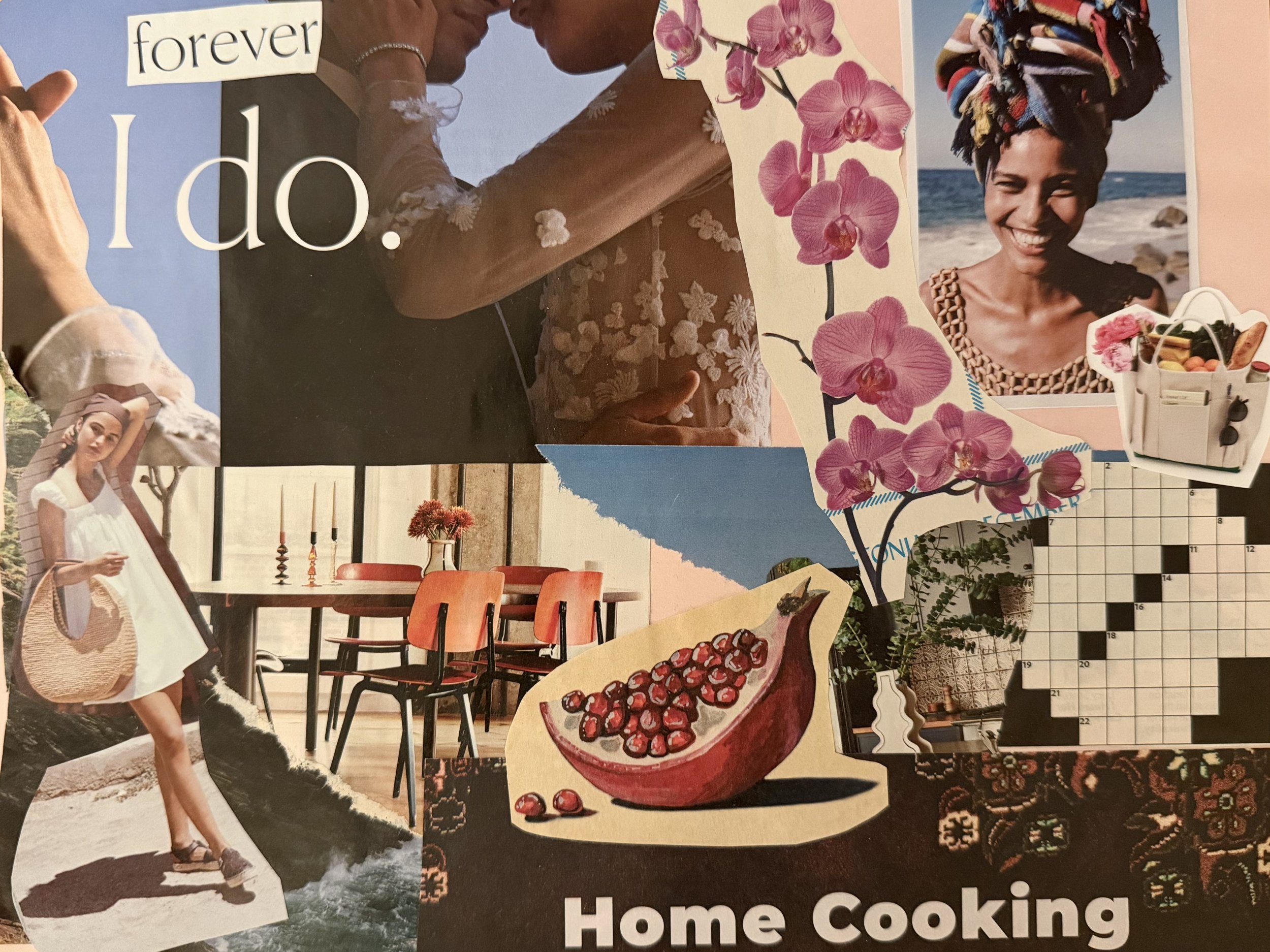
Once your algorithm learns that you’re wedding planning, it’s prepared to sell you a vision of a perfect day. “4 Things Every Bride Needs To Know,” it tells you, accompanied by photos of floral sculptures, elaborate tablescapes, and elegant photoshoots without a cloud in sight.
You scroll through Pinterest, seeking inspiration for your sofreh aghd. Everything screams opulence — white marble and shining crystal and gleaming gold. It feels cold, lifeless.
You ask yourself, what is the point of opulence at a time like this?
Your timeline shifts smoothly from that bridal content to reminders of the realities you’re living in: a country slipping into fascism, pointless conflict waged over pride, a barbaric genocide routinely ignored, the increasing prospects of nuclear war.
You’ve spent a lifetime compartmentalizing. The last few months have brought that to a new level. You cling to the hope that nothing will go wrong on your wedding day.
(On a Sunday morning, I’m going over my wedding planning spreadsheet. Guest lists, budget numbers, and task lists blend into one another. My attention wanders. I move one tab over, where I have al-Jazeera pulled up, refreshing for the latest updates on the war in Iran. I’m scrolling and scrolling when a text message pops up. “Hey, how’s wedding planning going? SO excited for your big day! ♥️” Right. I pull up the text to respond, “It’s going great! So excited for you to be there! 😊”)
You ask yourself, what is the point of hope at a time like this?
You are lucky to have a wedding, you remind yourself. Be grateful.
Sahar Roodehchi is a writer and storyteller based in Washington, DC.