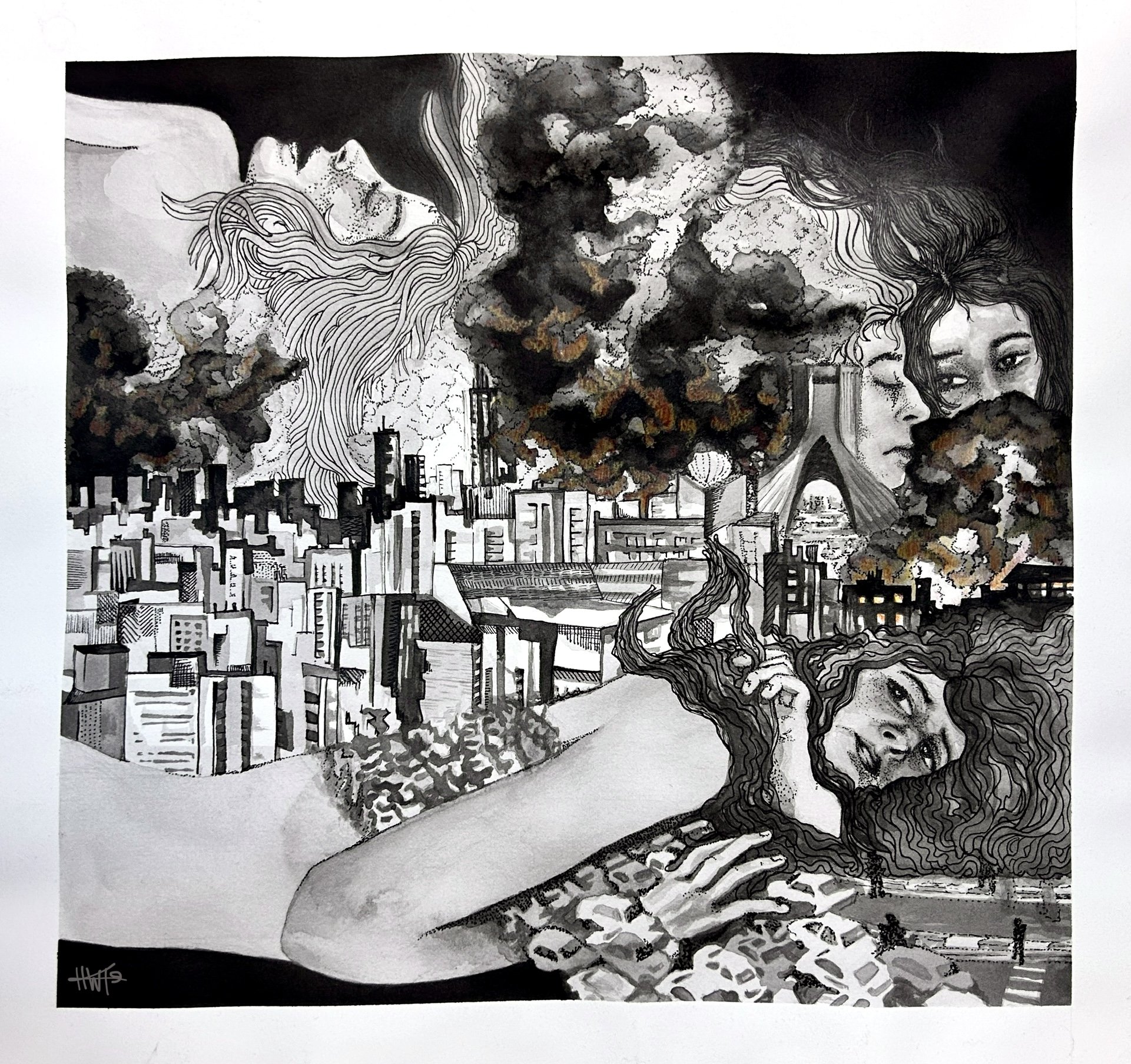
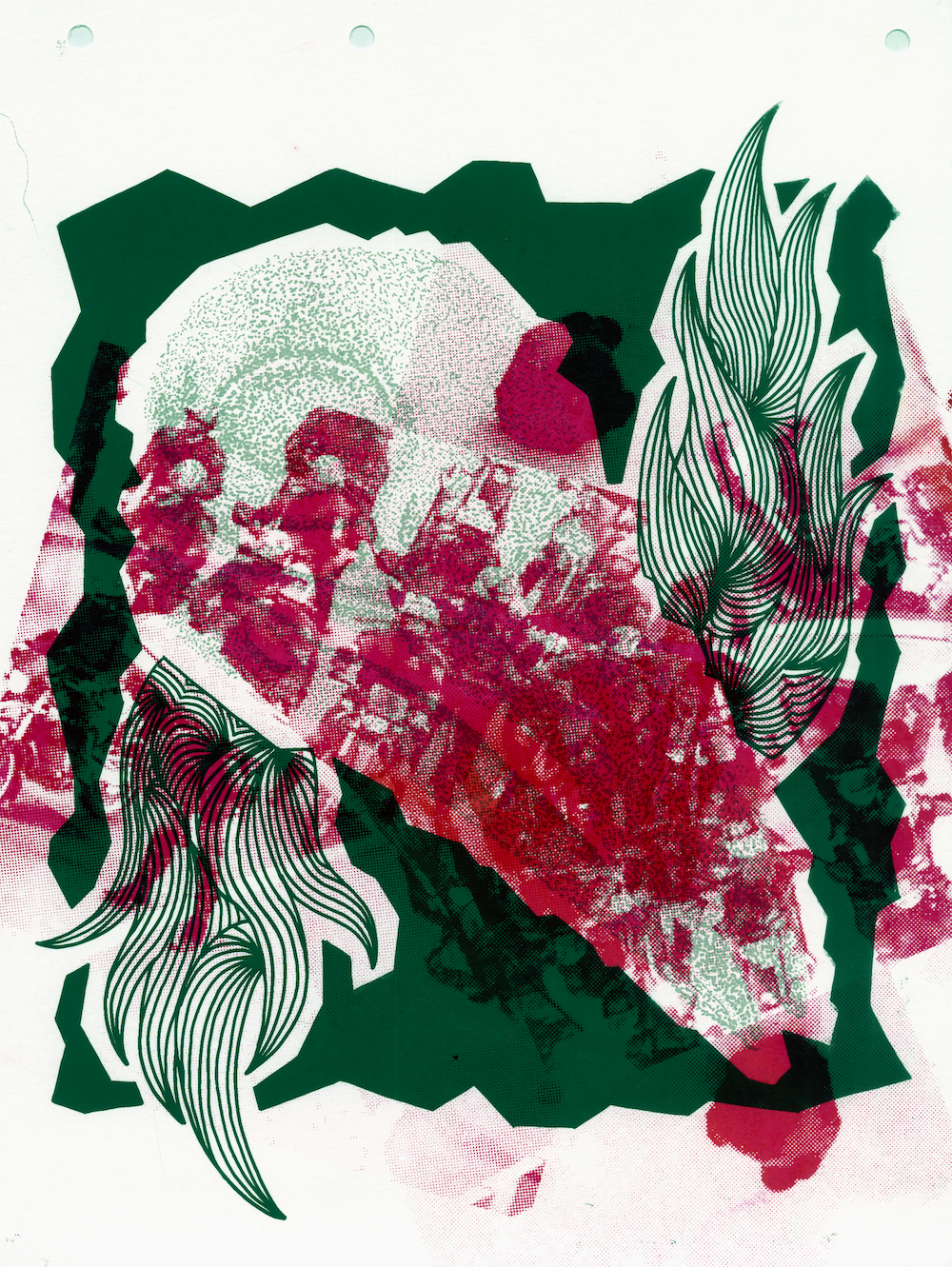
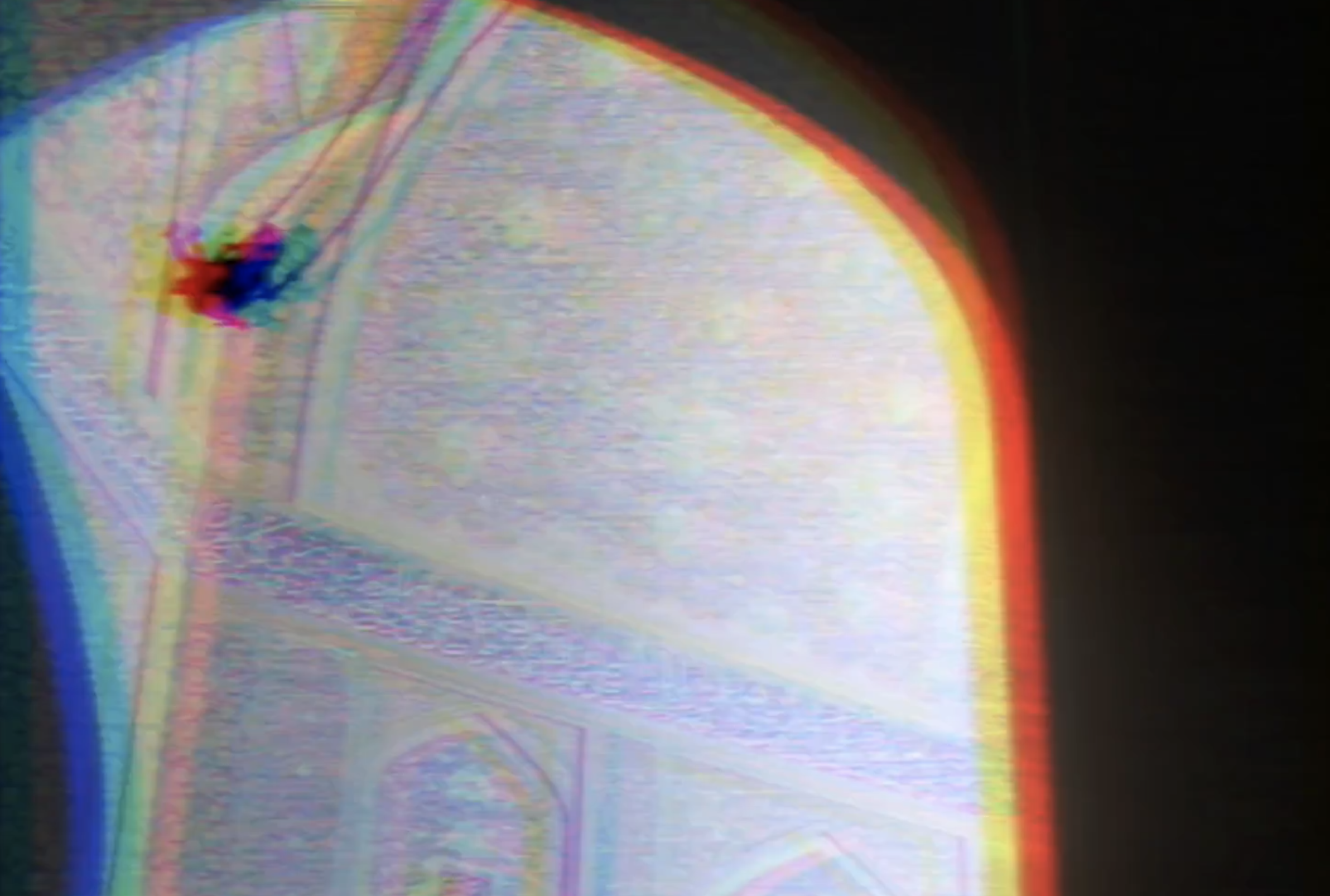
Lost in the cloud of the Internet blackout, a black cloud that has been hanging over the Iranian plateau since January, anything becomes Internet. Cyberspace spills out into real life; rather, like death and mourning and tragedy, it consumes life. Cyberspace consumes life. To the point where acts performed in the absence of the Internet still carry a resonance of it. A performance that functions as a continuation of the net into a new sphere. These can only be felt in the blackout. Lost in the cloud, but I received certain messages. And I could send some as well.
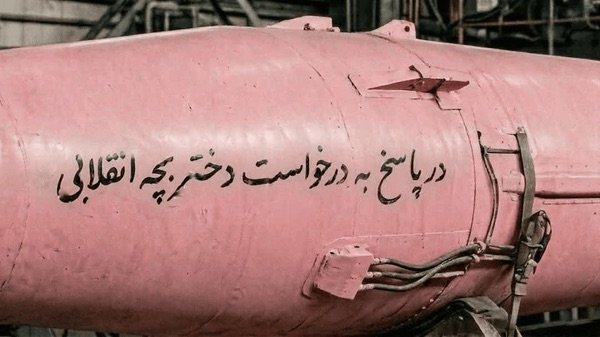
Seda-o-Sima, Iran’s governmental broadcast channel, lets you submit suggestions for slogans to write on their missiles. If you’re chosen, you receive a certificate and an image of your missile intact, and on impact. Exploded with or even because of your words. This new wave of warfare art, fittingly called “moshaknegari,” became an analog media platform on a steel body. Rumors say the missiles were never launched. They landed in cyberspace. Warfare and words interwoven, the words and the recoloring seem to mask the fact that they are written on a destructive weapon. The multipurpose use of a medium leaves you bewildered. Am I looking at the missile or the words? Is there any distinguishing between the two? I am looking at an image, I seem to forget.
“Is the missile a toy? Why is warfare meant to be portrayed as a game? A game is a set of rules, and no matter how hard you try to beat it, there’s a winner and a loser.”
I think of children as dangerous beings. As a hopscotch filled with mines. Number four?
The lack of a critical discourse on children’s autonomy expressed through laws and rights during the Iran-Iraq war which has, again, continued, and spilled out into real life—or was that real life too? Of children being sent to the front to fight and die, to then be made martyrs, and finally painted on street walls. Children writing on missiles.
Or is it all a children’s game; that’s what they’re trying to tell us? Is the missile a toy? Why is warfare meant to be portrayed as a game? A game is a set of rules, and no matter how hard you try to beat it, there’s a winner and a loser. The winner is the one with a good story. Are you making the child dangerous or bringing out the evil in the child?
There’s a video circulating in the IRGC’s Baleh channels of children in the nightly street demonstrations and gatherings. They are play-learning how to use (real) rifles and other war machinery, including proper film gear and cameras. Then, they are interviewed and talk about sacrificing their lives for their country, of having to protect their land if it comes to that. Which they hope it does.
Diba TajAbadi is a creative researcher, writer, and gatherer based in Iran. She's working at the interstices of embodied research, writing, organizing, and publishing across her given (Northern Europe) and chosen geography. Her work is drawn to spontaneous projects and explores ideas of (post)nature, counterarchiving, mapping, migration, and subversive tactics.